
Tummi, a real-time gut health tracker, 1st Place
Tummi, a real-time gut health tracker, 1st Place
Physical & Digital Product Lead
April 2025
Physical & Digital Product Lead
April 2025
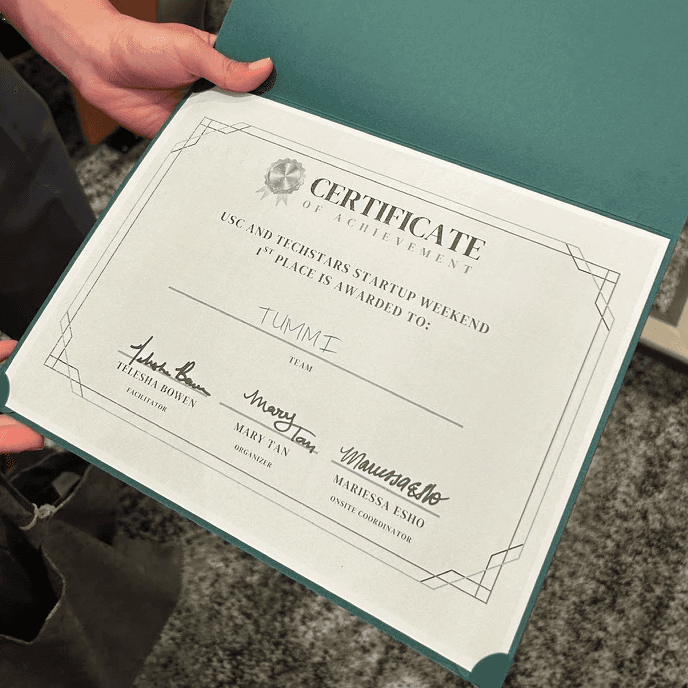
Over a two-day Techstars x USC sprint, my team and I developed and pitched a product that took home 1st place, securing interviews with Techstars Catalyst and the Techstars Accelerator.
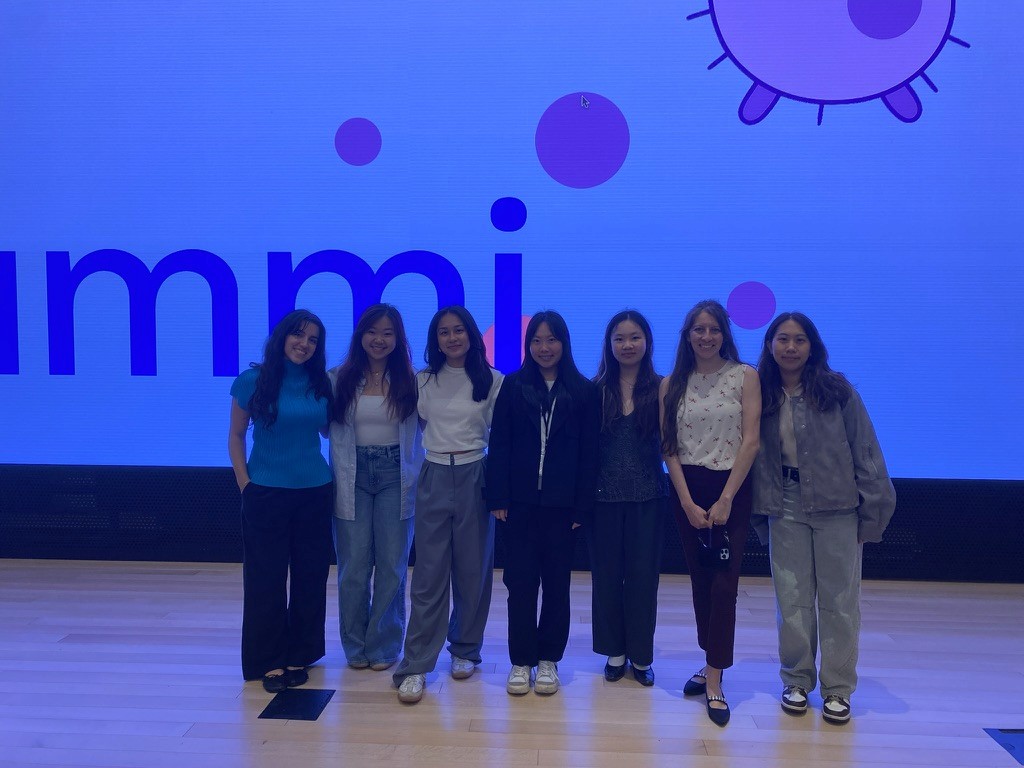
I led a four-person team through user research, technical validation, and materials exploration, and built the pitch narrative and deck to set our speaker up for a winning presentation.
Over a two-day Techstars x USC sprint, my team and I developed and pitched a product that took home 1st place, securing interviews with Techstars Catalyst and the Techstars Accelerator.
I led a four-person team through user research, technical validation, and materials exploration, and built the pitch narrative and deck to set our speaker up for a winning presentation.
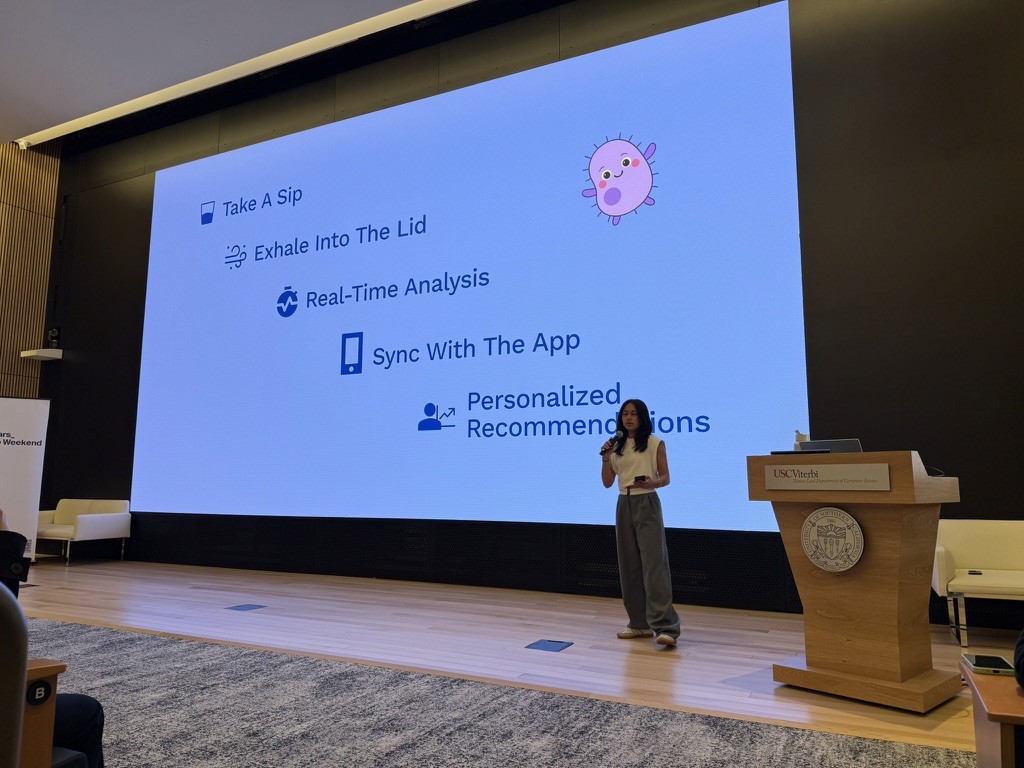
2 out of 3 Americans experience gut discomfort and don’t know the underlying cause. source
Your real time gut health tracker. Made for people conscious about their gut wellness.
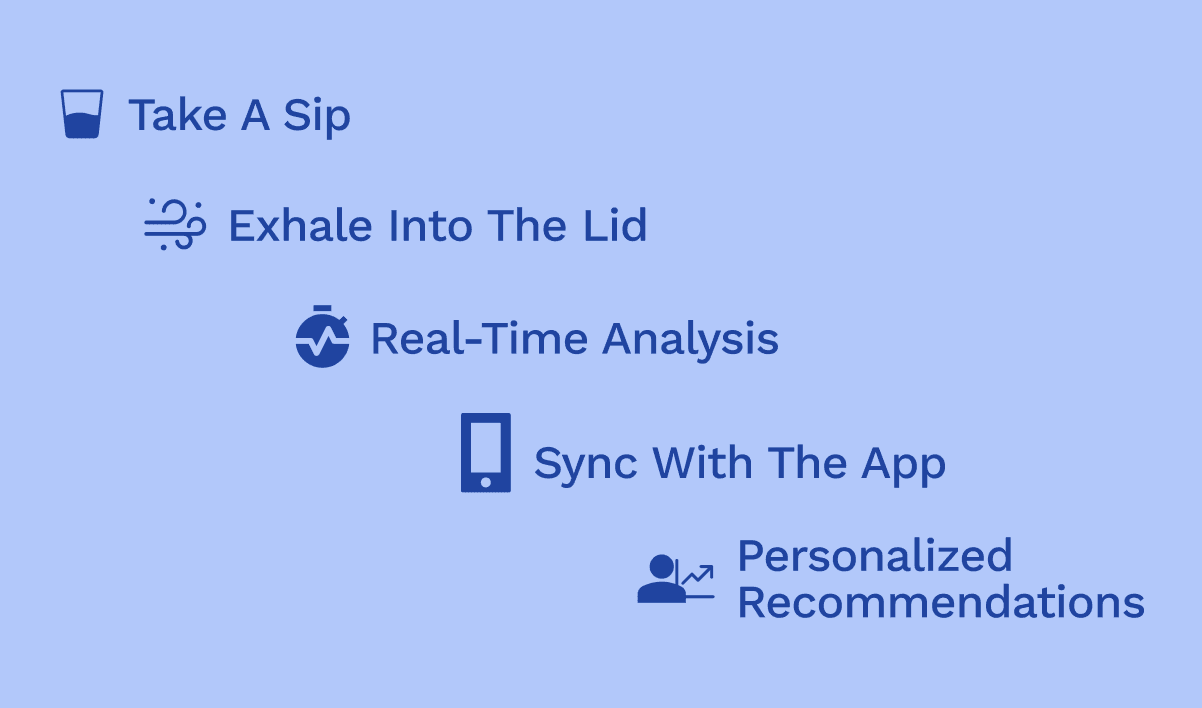
You sip—Tummi tracks the gases your gut releases when it reacts to food.
To start, you log a few meals to help build your unique gut fingerprint.
Then our app lets you know how your body handled each meal.
Your real time gut health tracker. Made for people conscious about their gut wellness.
You sip—Tummi tracks the gases your gut releases when it reacts to food.
To start, you log a few meals to help build your unique gut fingerprint.
Then our app lets you know how your body handled each meal.
This is where Tummi comes in.
This is where Tummi comes in.
2 out of 3 Americans experience gut discomfort and don’t know the underlying cause. source
How we did it
How we did it
Throughout the weekend, we formed teams based off the interest of the pitched idea. What drew me to the idea was how smart it was to have sensors in a water bottle to detect molecules in your gut health. This made me want to research into the mechanism and be part of the design feasibility.
Research
Saturday morning, the team an I huddle to re-confirm the product idea and we split off into two different research teams, one for tech and science, another one for customer discovery.
In the customer discovery group, we created surveys and conducted customer interviews. Within just two hours, we were able to get 54 survey responses & 22 in-person interviews. This is what we found:
Throughout the weekend, we formed teams based off the interest of the pitched idea. What drew me to the idea was how smart it was to have sensors in a water bottle to detect molecules in your gut health. This made me want to research into the mechanism and be part of the design feasibility.
Research
Saturday morning, the team an I huddle to re-confirm the product idea and we split off into two different research teams, one for tech and science, another one for customer discovery.
In the customer discovery group, we created surveys and conducted customer interviews. Within just two hours, we were able to get 54 survey responses & 22 in-person interviews. This is what we found:
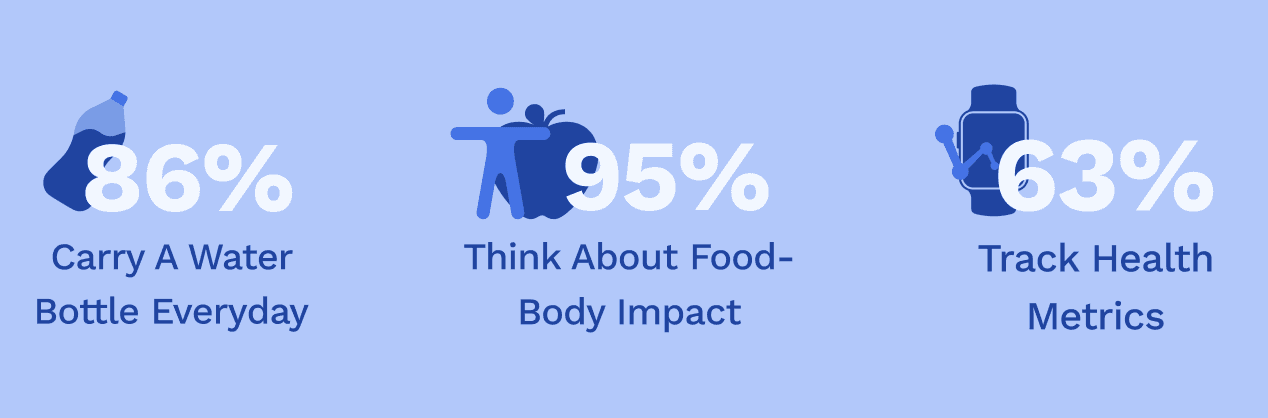
Through this research, we further validated the problem space and the need for a solution in this space. These stats helped validate that a water bottle is a personal item that is constantly used, people think about how food affects their body and people already track their health metrics. It was just that there was no product on the market that streamlines this specifically for gut health.
We also found that the biomarkers that indicate gut health inflammation such as bloating and stomach pain can be measured through our breath with different levels of hydrogen, methane and VOC (Volatile organic compounds). We also found that spit doesn't really give us clear indicators of the status of the gut, so the gas biomarkers were definitely the route we wanted to take.
Through this research, we further validated the problem space and the need for a solution in this space. These stats helped validate that a water bottle is a personal item that is constantly used, people think about how food affects their body and people already track their health metrics. It was just that there was no product on the market that streamlines this specifically for gut health.
We also found that the biomarkers that indicate gut health inflammation such as bloating and stomach pain can be measured through our breath with different levels of hydrogen, methane and VOC (Volatile organic compounds). We also found that spit doesn't really give us clear indicators of the status of the gut, so the gas biomarkers were definitely the route we wanted to take.
Ideation
Ideation
After this, we started to brainstorm the way that this product would work and so many questions came up. The biggest questions we faced were: How would we be able to get air to the water bottle and to the sensor? Where would the sensor sit? How would we keep the water out of the sensor and battery and how do we protect that?
Initially, we were thinking what if the water bottle had a cap, where the sensor would sit and the user would blow into it through their nose? However, the research team quickly shut that down as they told us that the gases through the mouth were more accurate than through the nose.
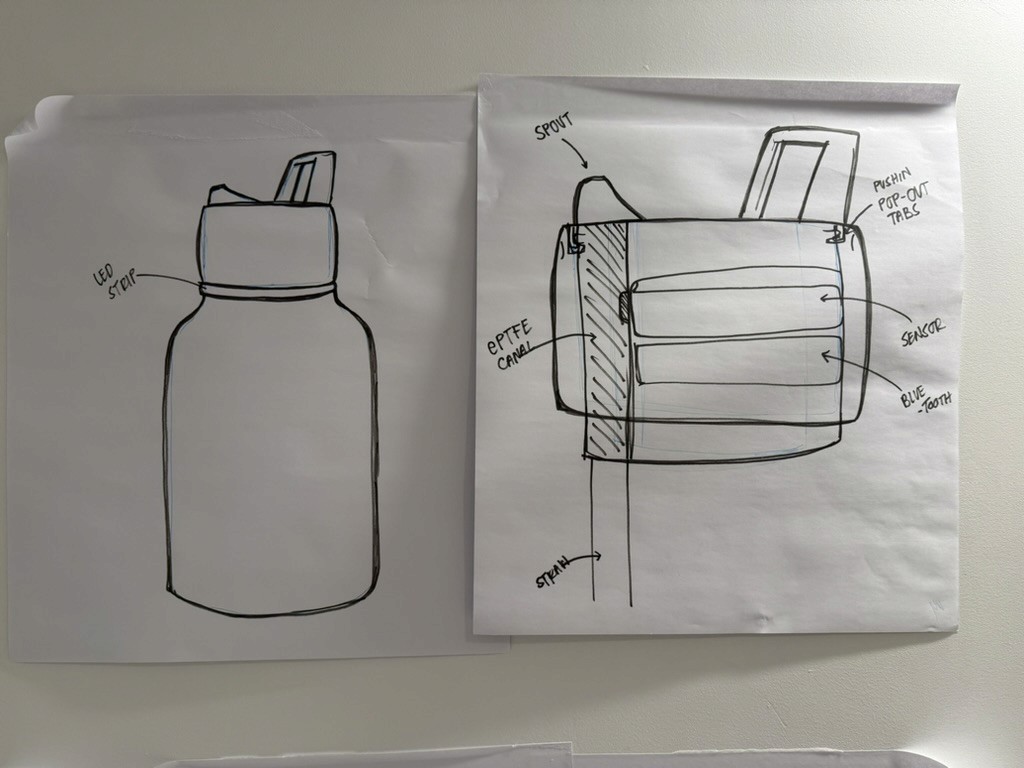
Due to the shortage of time, we got to sketching as we ideated.
Since we were also aiming for more accuracy of biomarkers through the mouth, we started thinking about the logistics of the airway through the straw and where the sensor and other tech would sit for that.-- we found that the bottom of the cap would be the most feasable and safe option to prevent any water damage.
After this, we started to brainstorm the way that this product would work and so many questions came up. The biggest questions we faced were: How would we be able to get air to the water bottle and to the sensor? Where would the sensor sit? How would we keep the water out of the sensor and battery and how do we protect that?
Initially, we were thinking what if the water bottle had a cap, where the sensor would sit and the user would blow into it through their nose? However, the research team quickly shut that down as they told us that the gases through the mouth were more accurate than through the nose.
Due to the shortage of time, we got to sketching as we ideated.
Since we were also aiming for more accuracy of biomarkers through the mouth, we started thinking about the logistics of the airway through the straw and where the sensor and other tech would sit for that.-- we found that the bottom of the cap would be the most feasable and safe option to prevent any water damage.
The Physics
The next question we looked at was the feasability of getting extra air to be deposited into the bottle and how that would work.
After the suction, that increases the pressure inside the water bottle, pulling in extra air from the mouth and into the bottle, then ideally into the sensor.
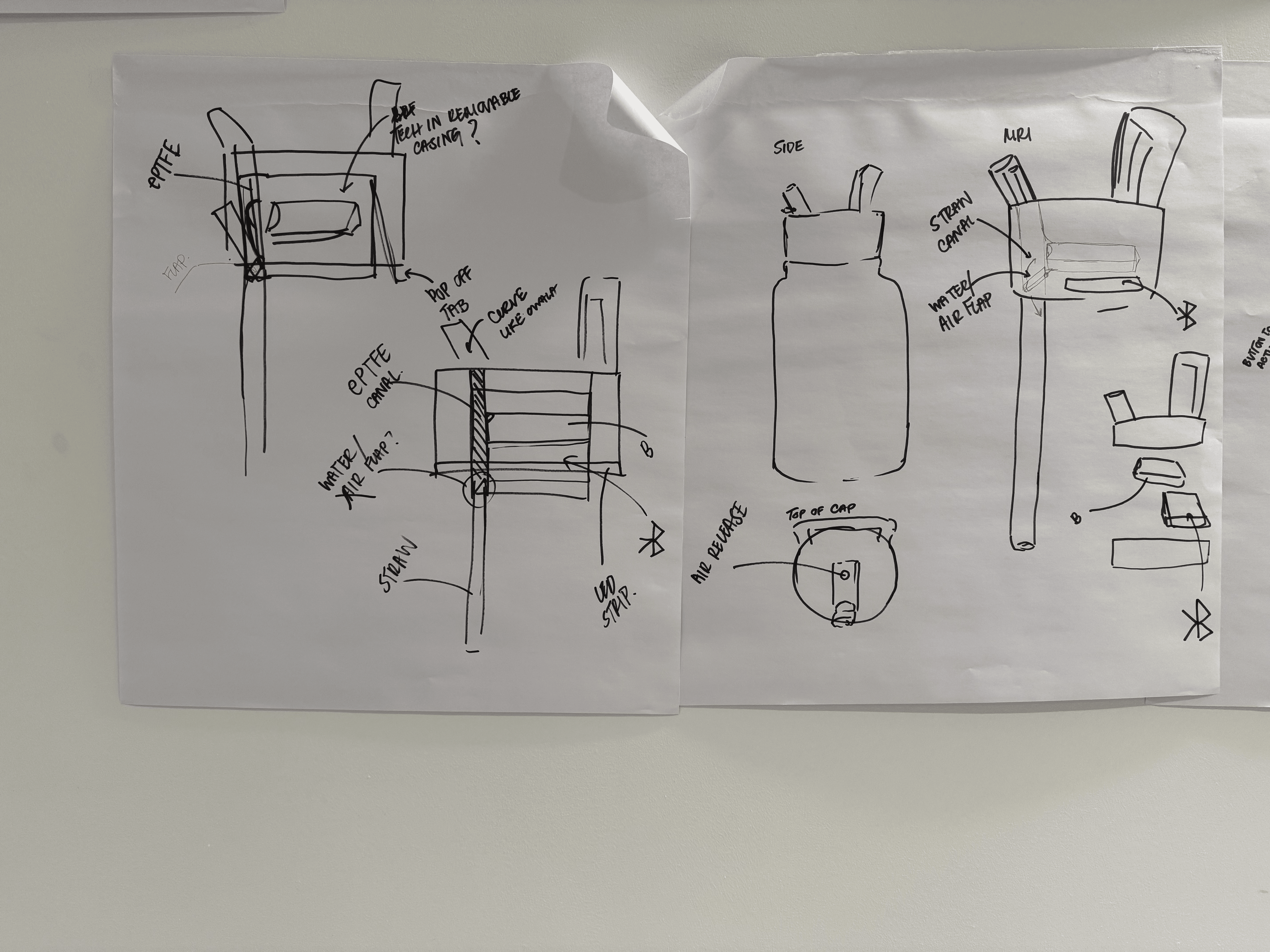
We also incorporated an air release hole (pictured below), into the bottle to release any extra pressure.
Can we separate air and water?
We first thought about a flap similar to a esophageal flap (thank you bio background 🙂↕️), which is able to separate different compounds through a flap. (pictured right)
Through that, after water and suction is released from the straw, the light weight flap will be able to flap down and only filter the gas molecules into the sensor through the straw.
Being concerned about the tech so close to the water source, we started looking into the possibilty of any materials that could filter water and air.
The Physics
The next question we looked at was the feasability of getting extra air to be deposited into the bottle and how that would work.
After the suction, that increases the pressure inside the water bottle, pulling in extra air from the mouth and into the bottle, then ideally into the sensor.
We also incorporated an air release hole (pictured below), into the bottle to release any extra pressure.
Can we separate air and water?
We first thought about a flap similar to a esophageal flap (thank you bio background 🙂↕️), which is able to separate different compounds through a flap. (pictured right)
Through that, after water and suction is released from the straw, the light weight flap will be able to flap down and only filter the gas molecules into the sensor through the straw.
Being concerned about the tech so close to the water source, we started looking into the possibilty of any materials that could filter water and air.
Through that, after water and suction is released from the straw, the light weight flap will be able to flap down and only filter the gas molecules into the sensor through the straw.
Being concerned about the tech so close to the water source, we started looking into the possibilty of any materials that could filter water and air.
To our surprise we found that a ePTFE (expanded polytetrafluoroethylene) used in GORE-TEX, has a controlled porosity level where water cannot pass through, but air and other molecules still are able to. (pictured left)
We incorporated that into the sketches and thought.. wait... then would we still need to have a flap to separate these two elements?
Since the materials already separate the elements, we no longer needed the flap. So we sketched out the finalized version.
Through that, after water and suction is released from the straw, the light weight flap will be able to flap down and only filter the gas molecules into the sensor through the straw.
Being concerned about the tech so close to the water source, we started looking into the possibilty of any materials that could filter water and air.
To our surprise we found that a ePTFE (expanded polytetrafluoroethylene) used in GORE-TEX, has a controlled porosity level where water cannot pass through, but air and other molecules still are able to. (pictured left)
We incorporated that into the sketches and thought.. wait... then would we still need to have a flap to separate these two elements?
Since the materials already separate the elements, we no longer needed the flap. So we sketched out the finalized version.
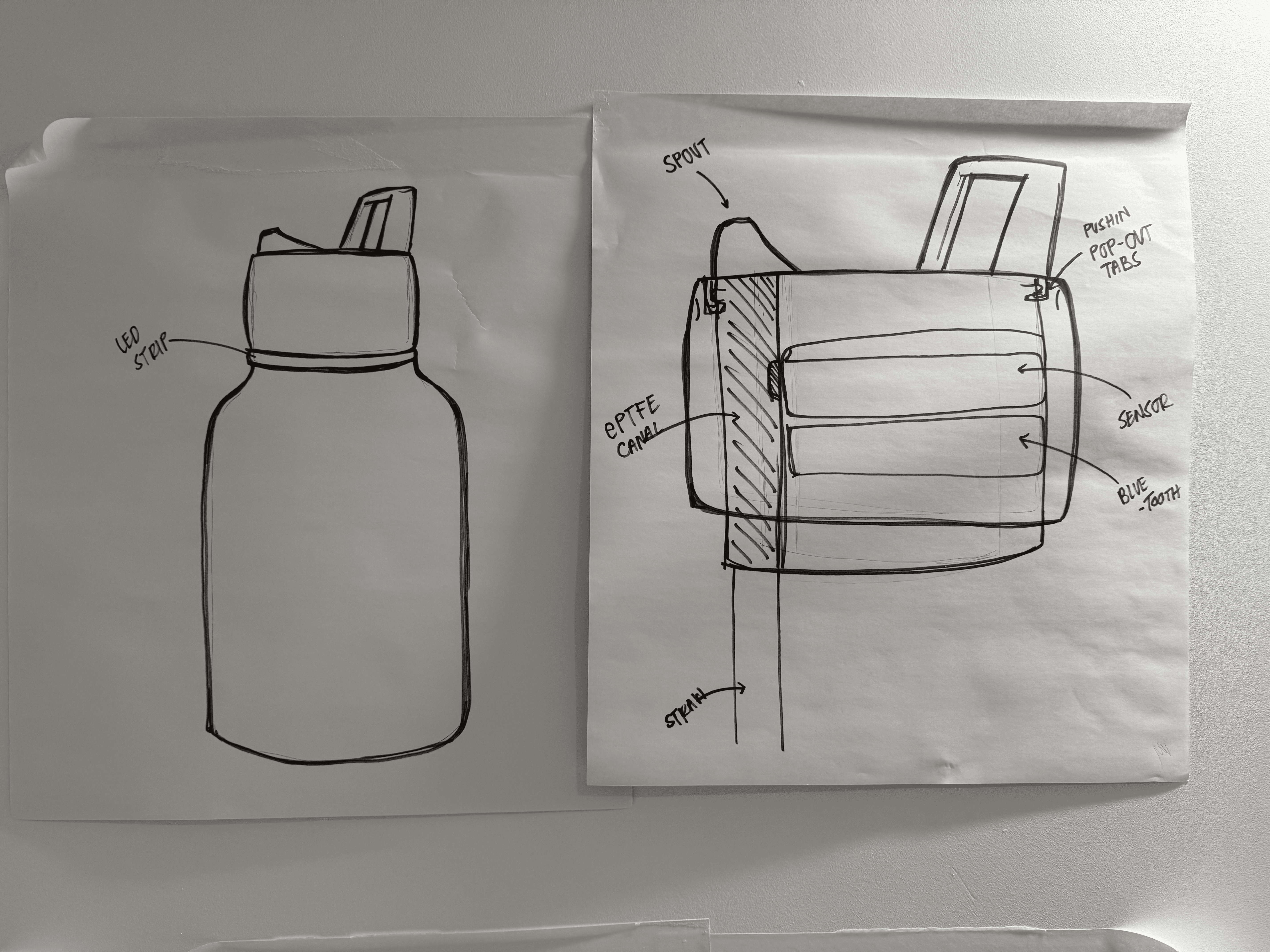
The Final
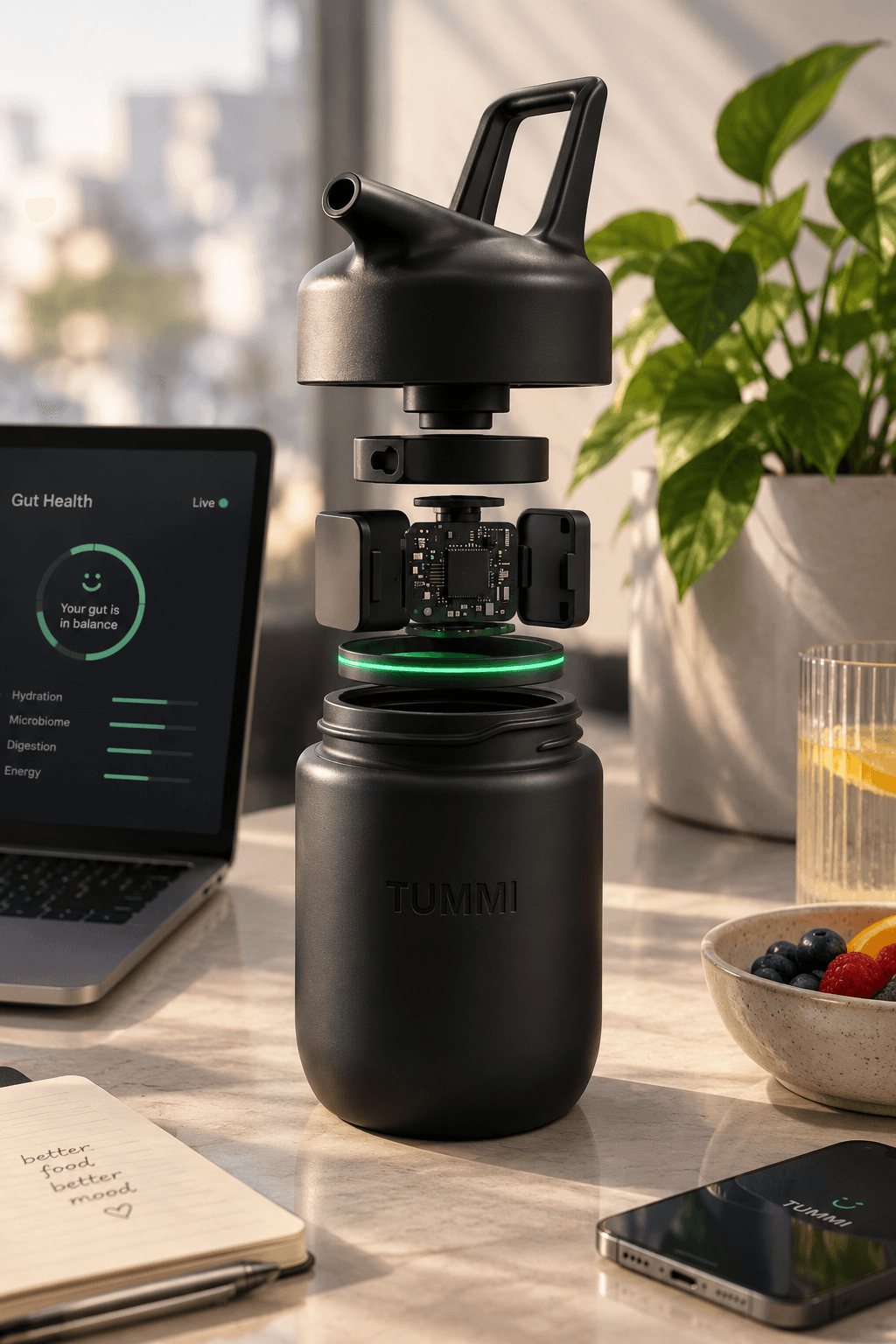
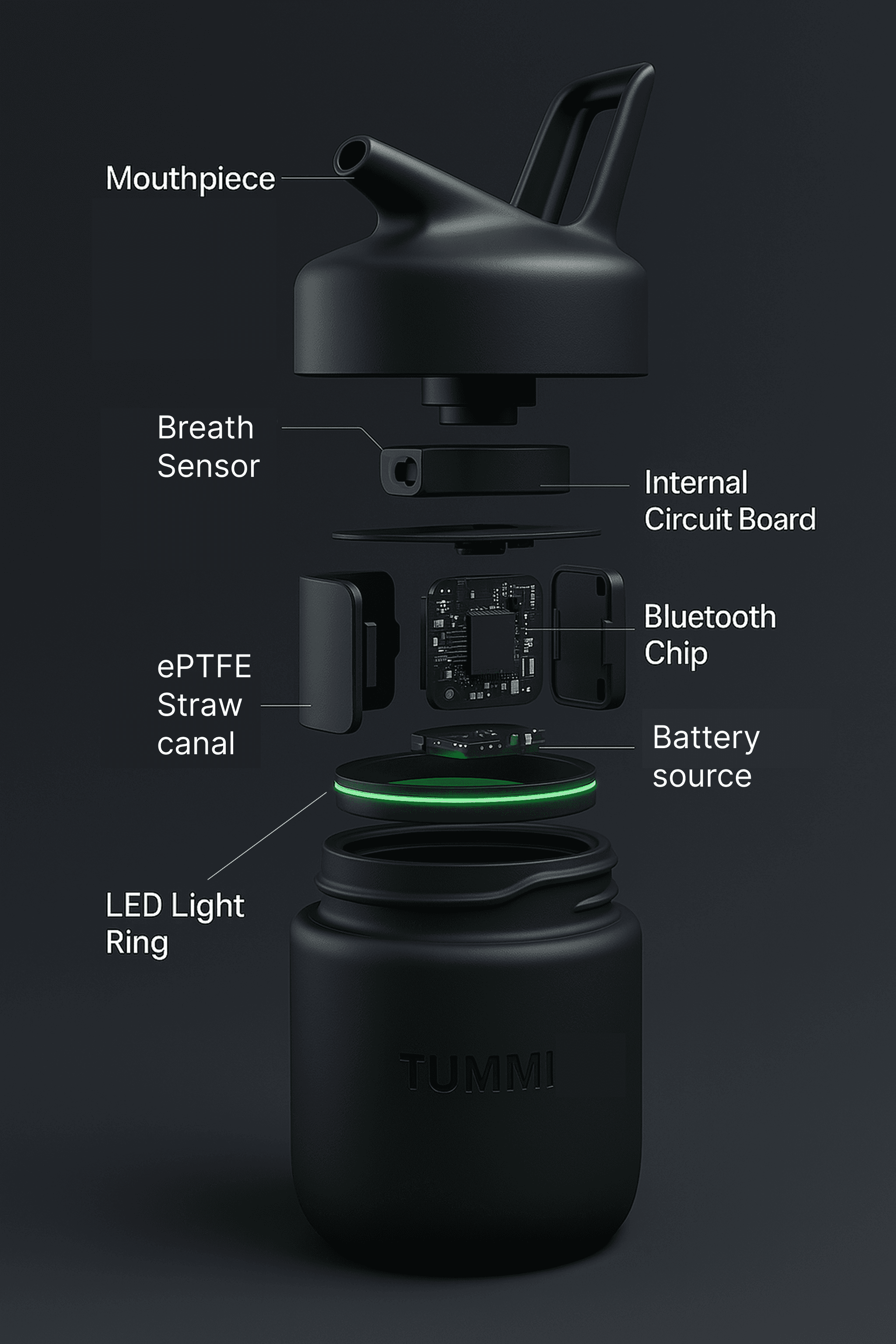
We added pop out tabs so the inside tech section could be taken out for cleaning and charging. We also made it to be like that so only molds of the inner section would have to be made during manufacturing or replaced if lost.
Then, we took the sketches and put it into ChatGPT to generate a more realistic image for us without having to spend our remaining couple of hours on 3D modeling.
The Final
We added pop out tabs so the inside tech section could be taken out for cleaning and charging. We also made it to be like that so only molds of the inner section would have to be made during manufacturing or replaced if lost.
Then, we took the sketches and put it into ChatGPT to generate a more realistic image for us without having to spend our remaining couple of hours on 3D modeling.
Afterwards, I was in charge of the app design as well. We aimed to make this app to communicate the measured data that the sensor would send to the user's phone. Since the gut biome is so specific to each person, the region they live in, their genetics etc., we planned to find everyone's baseline of their gut biometrics through using the product for 6 weeks for an accurate reading. After that, we would be able to track Hydrogen, Methane and VOC levels to better assist the symptoms and help the user keep track of the activities and food to keep the gut happy.
Afterwards, I was in charge of the app design as well. We aimed to make this app to communicate the measured data that the sensor would send to the user's phone. Since the gut biome is so specific to each person, the region they live in, their genetics etc., we planned to find everyone's baseline of their gut biometrics through using the product for 6 weeks for an accurate reading. After that, we would be able to track Hydrogen, Methane and VOC levels to better assist the symptoms and help the user keep track of the activities and food to keep the gut happy.
 SEE MORE

Let's Get to Know Each Other
Let's Get to Know Each Other